
Benjamin Banneker and the Wooden Clock
Benjamin Banneker studied a pocket watch, carved a working clock from wood, and later used years of patient sky-watching to write almanacs, a story about learning by observing and recording.

Benjamin Banneker studied a pocket watch, carved a working clock from wood, and later used years of patient sky-watching to write almanacs, a story about learning by observing and recording.
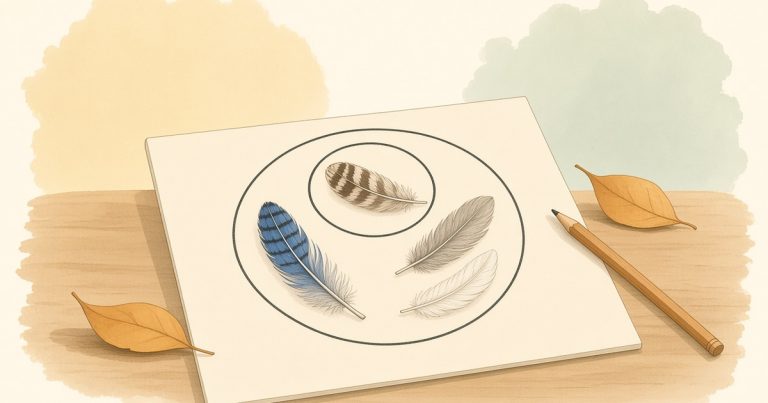
A simple logic game for the week before Thanksgiving: why “every turkey has feathers” does not mean “everything with feathers is a turkey,” and how to spot that mix-up at home.
An MIT study found that babies who watched an adult struggle and then succeed tried harder at their own hard task, which suggests it can help to let children see us work at things.

How to play Concentration, the classic face-down matching game, as a family thinking game that builds memory, attention and patience.

A gentle mid-November morning basket: Alice Cary’s public-domain poem “November,” one thing from outside, and one slow question about what is still alive, to share in about 15 to 30 minutes.
A paper-clip-on-water test, drawn from the U.S. Geological Survey, that lets families see surface tension at work, with a full safety box to follow at home.
Ada Lovelace wrote step-by-step notes for a machine that was never built, and saw clearly that such a machine might work with more than numbers alone.
A kitchen-table practice for testing whether a family rule is fair: name who it affects, try it from another seat, and ask what would make it fairer now.