



Armitage House did not begin with worksheets or short-term learning goals. It began with a deeper question.
What kind of thinkers do we want to raise?
Long before lesson plans or curriculum units, I noticed something quietly powerful. When children are introduced to timeless stories, great thinkers, and enduring ideas, something inside them steadies. They listen differently. They ask deeper questions. They recognize patterns in human behavior long before they have words for them.
The classics entered our home not as assignments, but as companions. Stories read aloud. Myths revisited. Philosophical questions asked naturally at the dinner table. These moments revealed something essential.
Children are not too young for big ideas. They are built for them.
That realization became a foundational pillar of Armitage House.
My fascination with learning began long before formal education decisions. During pregnancy, I became deeply curious about how humans develop wisdom, not just intelligence.
I studied neuroscience, child development, educational psychology, and creativity research. But alongside modern research, I kept returning to ancient sources. Philosophy. Classical literature. Foundational myths. The writings that shaped civilizations.
As an industrial engineer, I was trained to look for systems and patterns. What I noticed was striking.
Across cultures and centuries, the same stories appeared. The same moral dilemmas. The same questions about courage, justice, truth, love, and responsibility.
The classics were not outdated. They were enduring because they addressed the core of the human experience.
Children, I discovered, are naturally drawn to this depth when it is offered with care and curiosity.
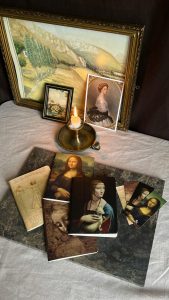
One afternoon, while reading a classical myth together, my son paused and asked a question that stopped me.
Why do people keep making the same mistakes, even when they know better?
This was not a reading comprehension question.
It was philosophy.
That moment revealed something profound. The classics do not teach children what to think. They teach children how to think. They offer mirrors into human nature and windows into the consequences of choices.
Through stories written centuries ago, children begin to recognize themselves, their emotions, and the world around them.
This is not nostalgia.
This is cognitive and moral development at its finest.
At Armitage House, the classics are not limited to one culture, one era, or one format.
They include:
Foundational myths and legends
Classical literature adapted for children
Philosophical stories and dialogues
Historical narratives that shaped civilizations
Timeless poetry and oral storytelling traditions
These works endure because they explore universal themes. Identity. Courage. Failure. Redemption. Curiosity. Power. Responsibility. Wonder.
When children engage with the classics, they are not memorizing dates or names. They are practicing wisdom.
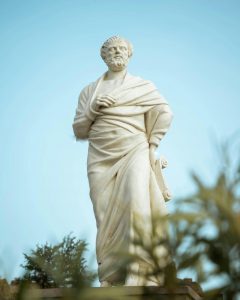
The classics give children something modern content alone cannot.
They build moral reasoning by presenting complex choices without simple answers.
They strengthen language through rich vocabulary and expressive storytelling.
They cultivate empathy by allowing children to inhabit many perspectives.
They develop patience and attention through layered narratives.
They offer philosophical grounding in a rapidly changing world.
Most importantly, the classics teach children that they are part of a much larger human story.
They learn that others before them have wondered, struggled, dreamed, and asked the same questions they are asking now.
This creates humility.
And confidence.
At the same time.
Armitage House is more than a curriculum provider. It is a learning ecosystem rooted in depth.
The classics are woven into everything we do.
They appear in our storytelling.
They shape our philosophy circles.
They inform our project-based learning.
They guide discussions in ethics, logic, and debate.
We do not separate ancient wisdom from modern science.
We do not separate imagination from rigor.
We do not separate storytelling from intelligence.
We integrate them.
Because children deserve both roots and wings.

The world children are growing into is fast, complex, and unpredictable.
The classics offer something stable.
They teach children how to pause.
How to reflect.
How to recognize patterns in human behavior.
How to ask meaningful questions before rushing to answers.
In a world of constant novelty, timeless ideas provide orientation.
They help children develop an inner compass.
You do not need an advanced degree or a rigid program to introduce the classics.
You can begin simply.
Read aloud together.
Ask open-ended questions.
Wonder aloud about characters’ choices.
Connect stories to everyday life.
Allow silence after big ideas.
The goal is not mastery.
The goal is relationship.
With ideas.
With stories.
With wisdom.
This journey began with a question, a book, and a willingness to slow down.
It grew through conversations, curiosity, and moments of quiet insight.
Today, the classics continue to shape the heart of Armitage House.
They help us raise thinkers who are not only knowledgeable, but wise.
Children who can imagine boldly and reason deeply.
Learners who understand that they belong to a long human story.
At Armitage House, we believe that timeless ideas belong to children.
As Albert Einstein reminded us,
“Imagination is more important than knowledge.”
And here, imagination is guided by wisdom.
Welcome to the conversation.
Welcome to Armitage House.